
India Needs More Women Judges in the Supreme Court
| UPSC Relevance – Women Judges in SC Prelims-Art. 124 – Appointment of SC judges,Collegium System – 2nd Judges Case (1993), 3rd Judges Case (1998),Strength of SC – 34 judges (incl. CJI),First woman judge – Justice Fathima Beevi (1989). Mains (GS II)-Issues: Opaque Collegium, lack of gender/caste diversity, late appointments limit tenure. Essay/Linkages-“Gender Justice as unfinished agenda.” |
Why in News?
On August 9, 2025, with the retirement of Justice Sudhanshu Dhulia, two vacancies arose in the Supreme Court. Many expected this to be an opportunity to correct the gender imbalance in the Court. However, the appointments of Justice Vipul Pancholi and Justice Alok Aradhe on August 29, 2025, meant that Justice B.V. Nagarathna remains the sole woman judge out of 34 judges in the Court. This has reignited debate over gender representation in India’s higher judiciary.
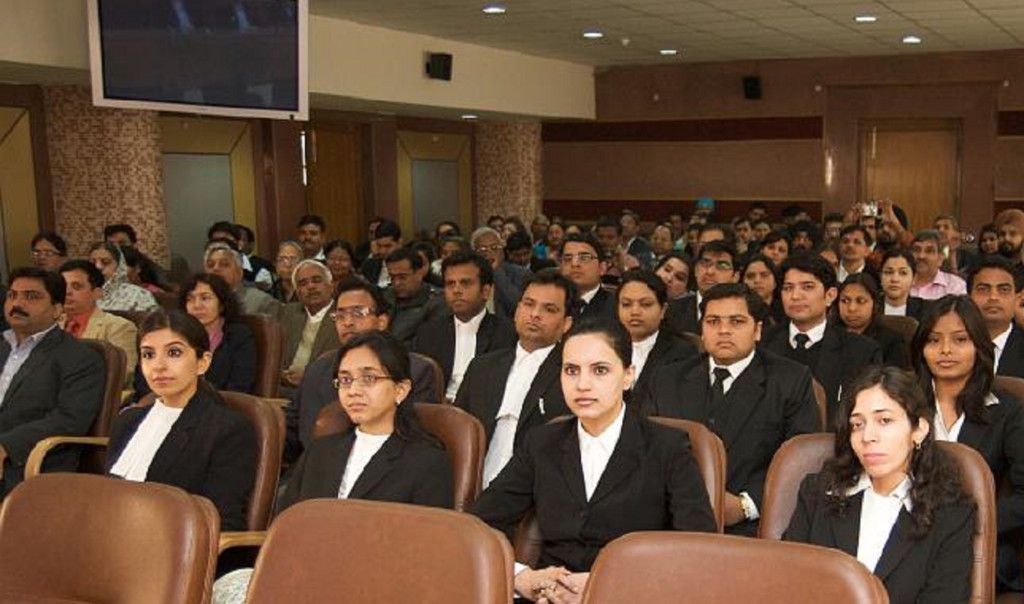
Background: Women in the Supreme Court of India
Since its inception in 1950, the Supreme Court has seen only 11 women judges out of 287 total appointments — a mere 3.8%.
- The first woman judge was Justice Fathima Beevi (1989).
- Currently, Justice B.V. Nagarathna is the lone woman judge, who will also become India’s first woman Chief Justice of India in September 2027, but only for 36 days.
- The last major push for gender inclusion came in 2021, when three women — Justices Hima Kohli, Bela M. Trivedi, and Nagarathna — were appointed together, briefly raising women’s share above 10%.
This data underlines the acute structural exclusion of women in the highest court.
The Problem of Gender Imbalance
- Low Numbers: Only 1 out of 34 judges today is a woman.
- Caste and Faith Gaps: No women from SC/ST communities have ever been appointed; Justice Fathima Beevi remains the only Muslim woman judge.
- Bar Elevation Disparity: Out of 10 direct appointments from the Bar, only Justice Indu Malhotra was a woman.
- Late Appointments: Women are often appointed at older ages, limiting their tenure and chances to join the Collegium or become CJI.
Why Do Women Judges Matter?
1. Representation & Legitimacy
- The judiciary is the guardian of justice and equality.
- A representative bench reflects the society it serves.
- When half the population (women) is barely represented, public trust in the Court’s inclusivity weakens.
👉 More women judges = stronger legitimacy and public faith.
2. Diverse Perspectives in Judgments
- Women bring their lived experiences of discrimination, family responsibilities, and workplace challenges.
- This often leads to nuanced and empathetic interpretations of law.
Example: In family law, custody disputes, or workplace rights, women judges can highlight dimensions male judges may overlook.
3. Constitutional Equality Mandate
- The Constitution guarantees equality and dignity (Articles 14, 15, 21).
- But if the Supreme Court itself fails to reflect equality, it weakens the credibility of these guarantees.
👉 A gender-balanced bench is not just desirable—it is a constitutional obligation.
4. Judicial Sensitivity in Gender-Related Cases
- Cases on sexual violence, workplace harassment, family disputes, property rights often require a gender-sensitive approach.
- Women judges’ perspectives can ensure fairer outcomes.
Example: Vishaka v. State of Rajasthan (1997) → landmark guidelines on workplace sexual harassment. Women judges’ voices were instrumental in shaping these protections.
Appointment Process and Gaps
1. Collegium System
- Judges of the Supreme Court are appointed through the Collegium system.
- It consists of the Chief Justice of India (CJI) + 4 senior-most judges, who recommend names to the President (executive formally approves).
👉 While this ensures judicial independence, it also creates closed-door decision-making.
2. Opaque Criteria
- There is no written mandate that requires consideration of gender, caste, region, or professional background.
- Decisions often depend on “seniority” and “merit,” but these are undefined and sometimes inconsistently applied.
👉 Lack of transparency leads to underrepresentation of women and other marginalised groups.
3. Tokenism Without Policy
- Occasionally, the Collegium mentions diversity as a factor.
- But since there is no institutionalised policy, it remains ad-hoc and tokenistic.
👉 Example: Even when women are appointed, it is not part of a long-term roadmap for representation.
4. Bypassing Senior Women Judges
- Several senior women judges in High Courts have been overlooked in recent appointments.
- Instead, relatively junior male judges were elevated.
👉 This highlights an implicit bias and reinforces the glass ceiling in the judiciary.
Global Comparisons
- U.S. Supreme Court: 4 out of 9 justices are women, including the first Black woman justice (Ketanji Brown Jackson, 2022).
- UK Supreme Court: Women representation stands at about 25%.
- South Africa: 30% women judges in Constitutional Court.
- India: Less than 4% historically, and only 3% in the current SC bench.
Challenges to Women’s Entry in Higher Judiciary
1. Glass Ceiling in the Bar
- The pipeline problem starts at the Bar itself.
- Very few women advocates make it to Senior Advocate rank or get visible high-profile cases.
- Since the Collegium often picks judges from senior advocates, this limits the pool of eligible women.
👉 Example: Out of 500+ designated Senior Advocates in the Supreme Court, only a handful are women.
2. Gender Stereotypes and Bias
- Women lawyers are often perceived as being more suited for family or service law cases, while men dominate commercial or constitutional matters.
- Such stereotypes undervalue women’s expertise, affecting their visibility in complex, precedent-setting cases.
👉 This bias creates a perception gap that influences who gets noticed for elevation.
3. Delayed Promotions Due to Career Breaks
- Judicial promotions are largely seniority-based.
- Women who take breaks for maternity or family responsibilities fall behind in the queue.
- Even if equally competent, they are overlooked because their male peers gain seniority faster.
👉 This creates a systemic disadvantage for women judges.
4. Opaque Collegium Practices
- The Collegium system lacks transparency in criteria for selection.
- Without written rules on gender or diversity considerations, unconscious bias creeps in.
- Women judges in High Courts often remain overlooked despite seniority and merit.
👉 The absence of an institutional diversity mandate perpetuates underrepresentation.
Way Forward for Gender Diversity in Judiciary
1. Institutionalise Gender Quotas
- Reserve at least 30% seats in Supreme Court and High Courts for women judges.
- Precedent: The Supreme Court itself directed Bar Councils/Associations to ensure women’s representation in leadership.
👉 A quota would create systemic change, not ad-hoc tokenism.
2. Transparent Collegium Process
- Collegium should publish clear selection criteria, making diversity (gender, caste, region, professional background) an explicit benchmark.
- Public reasoning behind appointments would enhance accountability and trust.
👉 This would reduce perceptions of bias and ensure women are considered fairly.
3. Encouraging Women from the Bar
- Elevate more women directly from the Bar to higher judiciary, not just from High Courts.
- Build mentorship networks where senior judges and advocates support women lawyers in complex litigation fields.
👉 This would widen the pool of women eligible for elevation.
4. Early Elevation for Longer Tenures
Appoint promising women judges at younger ages to ensure:
- Longer tenure in High Courts,
- More chances of reaching the Collegium, and even becoming CJI.
👉 This helps dismantle the seniority barrier that currently sidelines many women.
5. Intersectional Inclusion
- Focus not just on gender, but also ensure inclusion of:
Dalit, Adivasi, OBC women,
Women from minority faiths,
Women from regional and linguistic diversity.
👉 This ensures the judiciary reflects the full spectrum of Indian society.
Conclusion
The Supreme Court cannot remain a male-dominated institution while adjudicating on matters of equality and justice. True judicial legitimacy demands not just intellectual excellence but representative diversity. India’s higher judiciary must now adopt gender inclusion as an institutional principle rather than a matter of chance. Only then can the Court truly embody the Constitutional vision of equality and justice for all.
UPSC Prelims Practice Questions
Q1. Consider the following statements about women judges in the Supreme Court of India:
- Justice Fathima Beevi was the first woman judge of the Supreme Court.
- Justice B.V. Nagarathna will be the first woman Chief Justice of India.
- Justice Indu Malhotra is the only woman to be directly elevated to the Supreme Court from the Bar.
Which of the statements given above are correct?
A. 1 and 2 only
B. 2 and 3 only
C. 1 and 3 only
D. 1, 2 and 3
Answer -(D)
UPSC Mains Practice Questions
Q.“The presence of women judges is not just about representation but about enriching judicial outcomes with diverse perspectives.” Discuss in the context of the Supreme Court of India.(10 marks, 150 words)
SOURCE- THE HINDU
Found this helpful?
Bookmark for revision, Practice the mains question, and
Share with fellow aspirants! THANK YOU