Nutrient Based Subsidy Scheme (NBS)
UPSC Relevance; Prelims:Features of NBS Scheme.Mains (GS Paper 3 – Agriculture)
Why in the News?
The Union Cabinet, chaired by the Prime Minister, has approved the Nutrient Based Subsidy (NBS) rates for Rabi season 2025–26 for Phosphatic and Potassic (P&K) fertilizers.
This move aims to ensure the timely and affordable availability of fertilizers to farmers while maintaining balanced nutrient use in Indian agriculture.
Background
Understanding Subsidy
A subsidy is financial support provided by the government to reduce the cost of goods or services for consumers.
In the case of fertilizers, subsidies help farmers purchase essential nutrients at lower-than-market prices, ensuring higher productivity and food security.
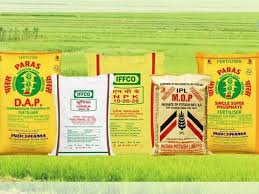
What is Nutrient Based Subsidy (NBS)?
- The Nutrient Based Subsidy (NBS) scheme was launched on 1st April 2010, replacing the earlier product-based subsidy system.
- Under NBS, the government provides a fixed subsidy per kilogram of nutrients — Nitrogen (N), Phosphorus (P), Potassium (K), and Sulphur (S) — contained in Phosphatic and Potassic (P&K) fertilizers.
- It is a Centrally Sponsored Scheme implemented by the Department of Fertilizers, under the Ministry of Chemicals and Fertilizers.
Main Objectives
- To ensure fertilizer availability at reasonable prices for farmers.
- To encourage balanced and soil-specific fertilizer use instead of over-reliance on nitrogenous (urea-based) fertilizers.
- To promote efficiency and competition in the fertilizer industry.
Key Provisions and Features
- Subsidy Based on Nutrient Content:Instead of subsidizing products, the subsidy is now linked to the nutrient content (₹/kg for N, P, K, and S).
- Freedom in Pricing:Fertilizer companies are free to fix Maximum Retail Prices (MRPs) for P&K fertilizers, keeping them reasonable and market-linked, while being monitored by the government.
- Coverage:Covers 28 grades of Phosphatic and Potassic fertilizers, including Di-Ammonium Phosphate (DAP) and NPKS complexes.
- Special Support Provision:The government can announce special packages or additional subsidies (for example, on DAP) during global price volatility.
- Urea Exception:Urea is not covered under NBS and remains under statutory price control with a fixed MRP of ₹242 per 45 kg bag (since March 2018).
Significance of the Scheme
- Affordable Fertilizers: Ensures steady supply of P&K fertilizers at subsidized and stable prices.
- Balanced Nutrient Use: Encourages scientific fertilizer use based on soil testing and crop needs, avoiding nitrogen overuse.
- Fiscal Transparency: Simplifies subsidy calculation and payment to companies, ensuring efficiency and accountability.
- Encourages Private Sector: Provides flexibility to fertilizer manufacturers, promoting competition and innovation.
Challenges Ahead
- Price Imbalance: Urea remains cheaper than P&K fertilizers, leading to imbalanced use (excess nitrogen, phosphorus deficiency).
- Import Dependence: India relies heavily on imports for raw materials like phosphate and potash.
- Delayed Payments: Subsidy disbursement delays affect liquidity for fertilizer companies.
- Environmental Concerns: Overuse of certain fertilizers continues to harm soil health and groundwater quality.
Way Forward
- Bring Urea under NBS: To create a uniform nutrient pricing system and promote balance.
- Promote Organic and Nano Fertilizers: To improve soil health and reduce chemical dependence.
- Enhance Domestic Production: Strengthen Atmanirbhar Bharat in fertilizer manufacturing.
- Digital Monitoring: Use real-time tracking and DBT (Direct Benefit Transfer) to ensure transparency.
Prelims Practice Questions
Q1. With reference to the Nutrient Based Subsidy (NBS) Scheme, consider the following statements:
- The scheme provides a fixed subsidy per kilogram of nutrient content such as Nitrogen, Phosphorus, Potassium, and Sulphur.
- It covers all fertilizers including urea.
- The scheme allows fertilizer companies to fix their Maximum Retail Prices (MRPs) reasonably under government monitoring.
Which of the statements given above are correct?
A. 1 and 2 only
B. 1 and 3 only
C. 2 and 3 only
D. 1, 2, and 3
Answer: B. 1 and 3 only
Explanation:
- The NBS scheme provides a fixed subsidy on nutrients (N, P, K, S) per kg — Statement 1 is correct.
- Urea is not covered under NBS and remains under price control — Statement 2 is incorrect.
- Companies can fix MRPs within reasonable limits monitored by the government — Statement 3 is correct.
Q2. Consider the following statements regarding fertilizer subsidy in India:
- Urea is regulated under the Nutrient Based Subsidy Scheme.
- Di-Ammonium Phosphate (DAP) and NPK complex fertilizers are covered under NBS.
- The NBS Scheme is implemented by the Ministry of Agriculture and Farmers’ Welfare.
Which of the statements given above is/are correct?
A. 2 only
B. 1 and 2 only
C. 2 and 3 only
D. 1, 2, and 3
Answer: A. 2 only
Explanation:
- Urea is not under NBS — Statement 1 is incorrect.
DAP and NPK are included in NBS — Statement 2 is correct. - It is implemented by the Department of Fertilizers, Ministry of Chemicals and Fertilizers, not Agriculture — Statement 3 is incorrect.
Mains Practice Questions
Q. (GS Paper 3 – Agriculture)
Explain the key features and objectives of the Nutrient Based Subsidy (NBS) Scheme.
Discuss how it aims to promote balanced fertilizer use and fiscal efficiency in the agricultural sector.(150 words)